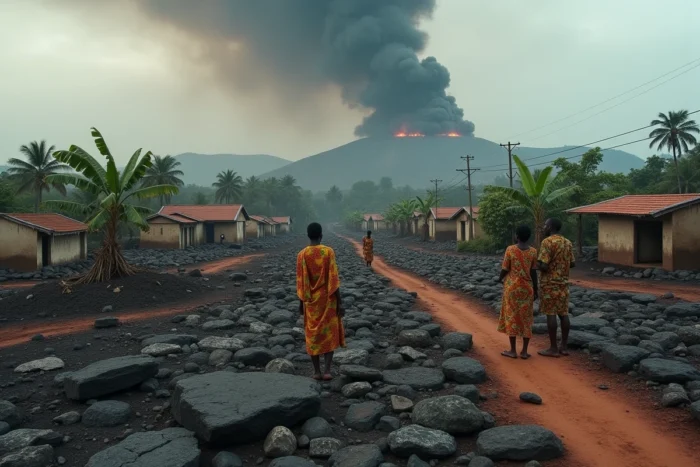
On May 22, 2021, shortly before 7 PM, a fissure opened on the flank of the Nyiragongo volcano in the Democratic Republic of Congo. A lava flow advanced towards Goma, a city of about one million inhabitants located on the shores of Lake Kivu. The eruption, which was effusive in nature, lasted only a few hours, but its humanitarian, urban, and scientific consequences are still being measured today.
Why Nyiragongo Surprised Volcanologists in 2021
Nyiragongo was already among the most monitored volcanoes in Africa. Its permanent lava lake, one of the few in the world, served as a visual indicator for researchers. However, a study published in the journal Nature showed that this eruption could not be predicted with the usual precursor signals.
The lava did not emerge from the summit crater; it broke through a lateral fissure on the eastern flank of the volcano. This mechanism caught the alert systems off guard, which relied on monitoring the lava lake and surface seismicity. Intense seismic activity only began after the eruption started, reversing the classic sequence where earthquakes announce the rise of magma.
To understand in detail the volcanic eruption in Goma, it is essential to incorporate this dimension: Nyiragongo revealed the limitations of monitoring protocols applied to volcanoes with lava lakes.
Human Toll and Material Destruction in Goma
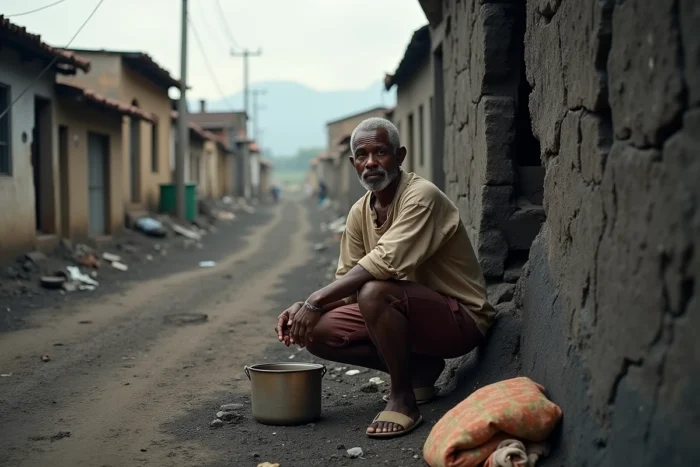
The lava flow poured out to the northeast of Goma, traversing densely populated neighborhoods. The direct toll remains difficult to establish accurately, but several dozen people lost their lives, some asphyxiated by gases and others killed during the explosion of a gas station or in the looting that followed the panic.
The material destruction documented by UNICEF and humanitarian agencies outlines the extent of the shock:
- More than 3,500 houses destroyed by lava, leaving thousands of families homeless in a region already weakened by armed conflict
- Several schools and health centers razed, including at least four health facilities and dozens of schools, depriving affected neighborhoods of basic services
- The main water reservoir of Goma destroyed, cutting off access to drinking water for nearly 200,000 people and creating an immediate health risk
- The majority of private pharmacies in the city obliterated, complicating medical care in the following days
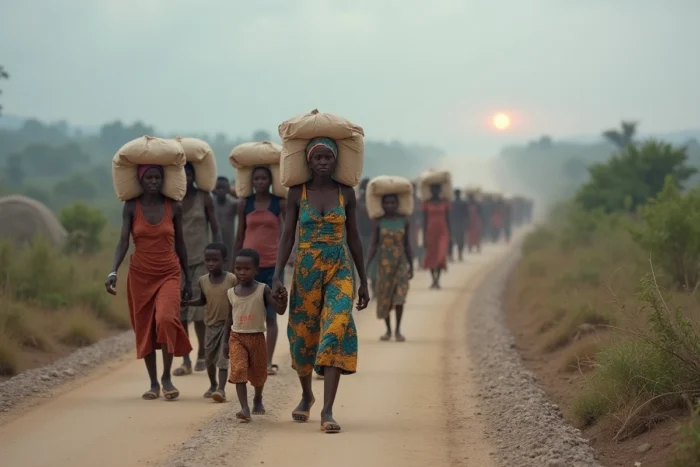
Approximately 234,000 people were displaced in the days following the eruption, primarily to Sake, Minova, and Rutshuru. UNICEF deployed a rapid response mechanism to distribute drinking water, hygiene items, and emergency kits to the displaced populations.
Goma, Regional Capital Weakened by the Volcanic Eruption
The impact of the disaster extends far beyond the lava flows. Goma is the economic and political capital of eastern DRC. All the provinces inland depend on this city for the delivery of humanitarian aid and the functioning of trade routes.
The destruction of road infrastructure and supply networks paralyzed exchanges for several weeks. The economic situation, already deteriorated by years of armed conflict, worsened further. Affected families, often lacking formal land titles, had no access to any structured compensation mechanism.
The Land Issue After the Disaster
Rebuilding on land traversed by lava poses a concrete legal problem. In the DRC, the land regime did not provide a specific framework for volcanic risk areas. A new land law, law no. 25/062 of December 30, 2025, introduces a principle for managing land exposed to natural risks. This regulatory evolution comes several years after the disaster, but it potentially reconfigures how Congolese authorities will approach reconstruction in volcanic zones.
Disappearance of the Lava Lake: A Transformed Volcano
Before 2021, Nyiragongo was globally known for its permanent lava lake, visible from the crater rim and photographed by thousands of visitors each year. This lake also served as a natural monitoring tool: its level variations reflected underground magmatic pressure.
Since the collapse of the crater during the eruption, no continuous lava lake has been observed. Subsequent observation campaigns describe a crater without a stable lava surface, featuring only sporadic incandescence and small temporary lava flows. The magmatic system has been profoundly reconfigured, and the volcano no longer presents the continuous lava mirror that served as a reference for scientists.
This disappearance complicates future monitoring. Without a reliable visual indicator, volcanologists must rely more on seismology, satellite geodesy, and gas emission measurements to anticipate a future eruption. Nyiragongo remains active, and the population density around Goma has not decreased.
Lessons from the Nyiragongo Eruption for Volcanic Risk Prevention
The 2021 eruption highlighted three structural flaws in volcanic risk management in urban African areas. First, reliance on a single type of precursor signal (the lava lake) delayed the understanding of what was happening. Second, the absence of a coordinated evacuation plan led to chaotic population movements, with massive traffic jams on exit routes. Finally, reconstruction occurred without risk zoning, due to the lack of an appropriate regulatory framework.
Goma remains exposed. Nyiragongo is only about fifteen kilometers from the city center, and its eruptive behavior has changed. The next alert will likely not resemble that of 2021, making a diversified monitoring system and a regularly tested evacuation plan even more necessary.