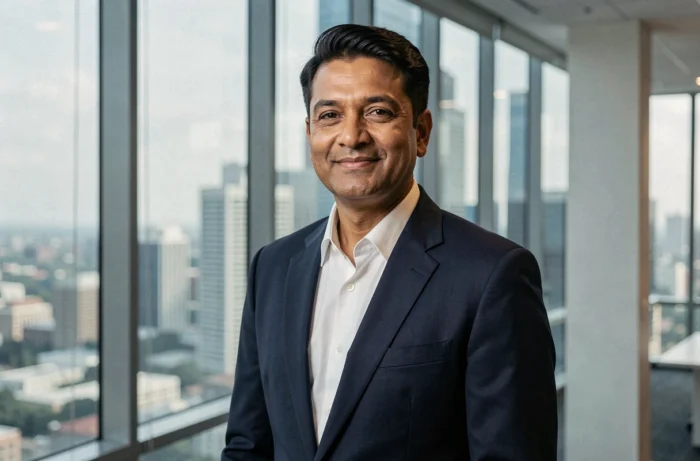
Sundar Pichai has been leading Google since 2015 and has held the position of CEO of Alphabet, the parent company, since December 2019. The question “who is the boss of Google” seems to be settled. However, it becomes less clear when we look at the actual decision-making chain: between the Alphabet board of directors, the co-founders who are still shareholders, and the heads of the artificial intelligence division, the effective power is distributed across multiple levels.
Sundar Pichai, CEO of Google and Alphabet: factual overview
| Data | Detail |
|---|---|
| Official title | CEO and Director of Alphabet Inc. and Google |
| Start date (Google) | 2015 |
| Start date (Alphabet) | December 2019 |
| Place of birth | Chennai, India |
| Nationality | American |
| Family status | Married, two children |
| Flagship products led before management | Chrome, Android |
Before becoming CEO, Sundar Pichai oversaw the launch of Google Chrome and then took responsibility for Android. This product-focused career, centered on services used by billions of people, earned him the trust of Larry Page.
To understand how governance is structured around the boss of Google in 2023, it is essential to distinguish the official title from the actual decision-making scope, which also depends on Alphabet’s shareholder structure.

Decision-making chain at Google: who really decides in 2023
Sundar Pichai holds the title of CEO for both entities, but Alphabet’s governance relies on a multiple voting rights share system. Larry Page and Sergey Brin retain, through Class B shares, a disproportionate voting weight compared to their capital share. Therefore, the Alphabet board can be influenced by the co-founders without them holding an operational role.
On a daily basis, Pichai’s latitude covers product decisions, technological investments, and Google’s business strategy. However, significant capital decisions (major acquisitions, restructurings) go up to the Alphabet board, which includes independent directors alongside Pichai.
The growing influence of AI leaders
The question of internal power has taken on a new dimension with the rise of artificial intelligence. Leaders of the AI division and DeepMind have gained direct influence over the product roadmap. AI has become the main resource allocation focus at Google, giving leaders in this area a de facto co-decision-making role.
Recent movements illustrate this dynamic: reorganizations within Google’s AI leadership have been documented, with departures of historical figures and internal promotions aimed at tightening the chain of command around Pichai.
From Chrome to Alphabet: Sundar Pichai’s path to leadership
Pichai’s journey is not that of a financier or a boardroom strategist. It is a product engineer’s journey who became a leader through demonstration.
- He joined Google in the early 2000s and initially worked on the search engine’s toolbar, a modest but highly visible product.
- He then led the development of Chrome, which would become the world’s most used browser, permanently changing the balance of power with Microsoft and Mozilla.
- Larry Page entrusted him with overseeing Android, the dominant mobile operating system, giving him authority over one of Google’s largest advertising revenue drivers.
- In 2015, when Alphabet was created, Page chose Pichai to lead Google. Four years later, when Page and Brin stepped back from executive roles, Pichai also took the helm of Alphabet.
What distinguishes this trajectory is the absence of a transition through a financial or legal leadership position. Pichai has climbed every rung through product, which explains his management style often described as consensual and engineering-oriented.
Google France: a leadership distinct from the parent company
The French subsidiary of Google is led by Sébastien Missoffe. This position of “head of Google France” does not involve a seat on the Alphabet board or power over the group’s overall strategy. The subsidiary director manages business relations with French advertisers, local partnerships, and dialogue with national regulatory authorities.
The confusion between global CEO and country director is common. Here is a quick summary of the succession at the head of Google at the global level:
| Period | CEO of Google |
|---|---|
| 1998-2001 | Larry Page |
| 2001-2011 | Eric Schmidt |
| 2011-2015 | Larry Page |
| 2015 – present | Sundar Pichai |
Eric Schmidt’s tenure from 2001 to 2011 corresponded to a period when the co-founders felt they needed an experienced leader to structure growth. Larry Page’s return in 2011, followed by the transition to Pichai in 2015, marks a return to internal leadership rooted in product.
Alphabet governance and AI: the balance that defines 2023
The power structure at Google in 2023 can be understood at three levels. Sundar Pichai holds the highest executive position. Co-founders Page and Brin retain significant shareholder leverage. AI leaders exert increasing operational influence over the group’s priorities.
This distribution is not static. Recent reorganizations in the AI division show that Pichai regularly adjusts the scope of his lieutenants to maintain control over technological direction. The title of CEO does not summarize real power: it coexists with a powerful founding shareholder structure and an increasingly autonomous AI technostructure.
For anyone seeking to understand who leads Google, the formal answer is two words. The complete answer requires looking beyond the official organizational chart.