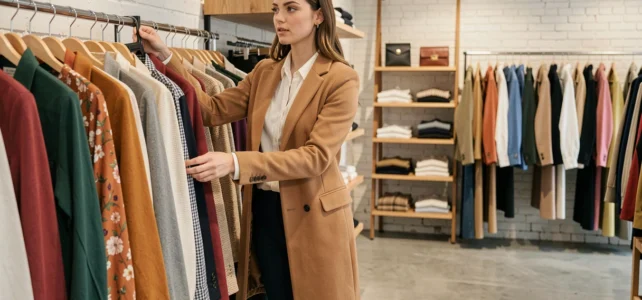
Every morning, the same reflex: open your wardrobe and look for what to wear. Daily fashion is not just about following the runways. It starts with concrete choices, well-selected pieces, and a few habits that change the way you dress without having to buy everything new each season.
Building a wardrobe with pieces that last multiple seasons
Have you noticed that some clothes appear in your outfits week after week, while others remain folded at the back of a drawer? This observation points to a simple principle: focus on versatile pieces rather than impulsive purchases.
A well-cut pair of jeans, a structured jacket, a straight dress in a fluid fabric. These basics form the foundation of a stable personal style. Color choice also matters: neutral tones (off-white, navy blue, beige, heather gray) combine effortlessly.
Exploring the world of fashion allows you to identify which cuts and materials transcend seasons without going out of style in a few weeks. The key is not to accumulate, but to select.
- A medium-rise straight pant, suitable for both the office and the weekend, replaces three pants with very marked cuts based on a fleeting trend.
- A thick cotton or blended linen jacket works from spring to autumn, unlike a very seasonal piece.
- A round-neck knit in a soft material (merino, combed cotton) can be worn under a jacket, over a dress, or alone with jeans.
Three well-chosen pieces offer more combinations than ten scattered purchases. Before adding a garment to your wardrobe, ask yourself: how many existing outfits can it be worn with?
Second-hand and circular fashion: a common reflex in France
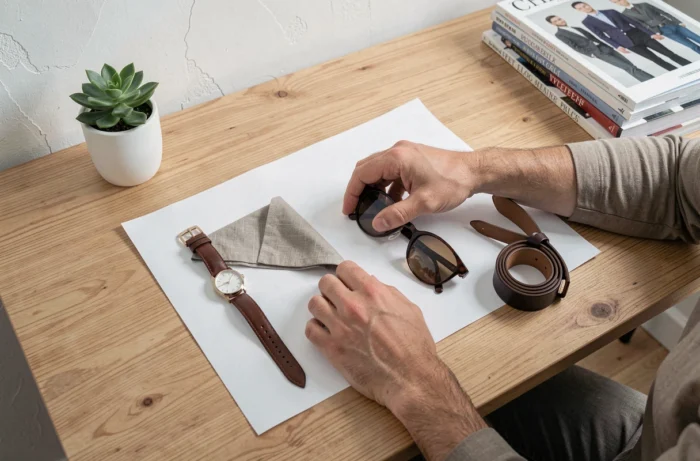
Second-hand is no longer a marginal alternative. Refashion estimates that textiles sold second-hand in France reached 65.8 kilotonnes in 2024, accounting for 7.4% of textile volumes consumed. This figure is growing year by year.
Why this shift? Price plays a role, of course. A second-hand wool coat often costs half of its new price, for the same quality of material. Resale platforms have also simplified the process: photographing, publishing, and shipping takes just a few minutes.
18-34 year-olds leading the circular fashion movement
The French sustainable fashion market is valued at $8 billion in 2025. Second-hand accounts for 11.8% of clothing purchases by value in the first half of 2025, and this rate climbs to 17.5% among 18-34 year-olds.
Specifically, for this age group, exploring fashion increasingly involves buying and selling, repairing, and upcycling. Buying a vintage pair of pants in good condition, having it tailored for a fit, and then reselling it when it no longer pleases: this cycle is gradually replacing the new purchase then trash model.
Adapting seasonal trends without changing everything
Each season brings its dominant colors, key cuts, and trendy materials. The temptation is to overhaul your wardrobe. The trap is ending up with very marked pieces that you won’t wear six months later.
Integrating a trend in small touches remains the most sustainable method. In spring, if pastel tones dominate, a scarf or a bag in this palette is enough to update a simple outfit. In winter, a chunky knit scarf or a textured beanie adds a seasonal touch without requiring a complete renewal.
Body shape and cuts: choosing what works for you
Trends offer silhouettes. Wide pants regularly come back, then give way to fitted cuts, and vice versa. Following these cycles without considering your body shape often leads to disappointing purchases.
A useful guide: try a trendy cut in a store or by ordering two sizes. If the piece requires too much mental adjustment (“I’ll wear it when I’m more comfortable”), that’s a signal. A garment that you put on with pleasure will be worn; the others will end up forgotten.
Colors and materials: two concrete levers to vary your looks
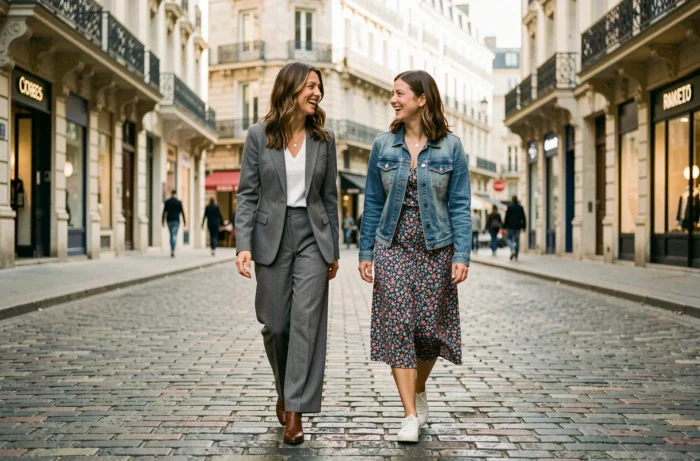
Changing style doesn’t always require new pieces. Playing with color combinations transforms a familiar outfit. A raw denim paired with a white top results in a very different look than the same jeans with a terracotta sweater or a sage green shirt.
Not sure which colors work together? A simple method: choose a dominant neutral shade, then add a single bold color. This duo avoids fashion faux pas without falling into monotony.
Materials change the perception of an outfit
The same pair of cotton twill pants looks casual. Its fine wool version appears dressy. The choice of material influences style as much as the cut. In summer, linen and lightweight cotton add movement. In winter, boiled wool or corduroy adds texture.
Mixing two contrasting materials in an outfit (a soft knit with rigid canvas pants, for example) creates a more visually interesting effect than a look entirely in the same textile range.
Daily fashion relies less on budget than on attention to detail: a suitable cut, a well-placed color, a comfortable material. The second-hand market now offers broad access to quality pieces, and seasonal trends are better digested in small touches than through complete renewal. What distinguishes a personal style from a copied one is the consistency of choices, not their price.