
Tourism in France is primarily based on the residents themselves, who account for about two-thirds of domestic tourism consumption. This emphasis on local tourism reshapes expectations: less distance traveled, more local anchoring. Measuring what travelers gain by choosing ethical and solidarity-based options within France allows us to go beyond mere intentions and evaluate the actual differences between a traditional stay and a responsible one.
Transport emissions in France: train versus plane on domestic routes
The Climate and Resilience Law of 2021 prohibits certain domestic flights when a direct rail alternative of less than 2 hours and 30 minutes exists. A circular issued in November 2023 goes further for the public sector: the train becomes mandatory whenever a direct journey of less than 4 hours is available.
The emissions differential justifies these measures. According to the 2025 modal comparator from SNCF Voyageurs, the TGV emits about 97% less greenhouse gases than a short-haul flight. This ratio transforms the transport question into a primary lever for anyone looking to travel responsibly in France.
| Criterion | Domestic Flight | TGV |
|---|---|---|
| GHG Emissions (comparative base) | Reference (100%) | About 3% of the reference |
| Legal Framework 2023 (public sector) | Prohibited if rail alternative < 4 h | Mandatory if direct route < 4 h |
| Climate Law 2021 (general public) | Removed if alternative < 2 h 30 | Maintained |
For an ethical stay, the choice of transport mode weighs more than the destination itself. Structuring an itinerary around the dense and fast French rail network measurably reduces carbon footprint, without compromising travel time for most connections.
Organizations like Terres d’envies offer to link solidarity tourism and short circuits, relying on local sectors that limit long-distance travel and promote the economy of the regions traversed.

Rural and solidarity tourism in France: what Atout France data shows
Rural tourism represents a significant share of French tourist attendance. Data from Atout France confirms that rural areas attract clientele seeking authenticity and social connection, two pillars of solidarity tourism.
However, the geographical distribution remains unbalanced. Major metropolitan areas and the coast capture the majority of flows, while rural territories, often home to ethical initiatives, struggle to gain the same visibility.
What distinguishes a solidarity stay from a classic rural stay
A stay in a rural gîte does not automatically constitute a solidarity experience. The difference lies in the economic redistribution and the involvement of local communities in the design of the stay.
- A solidarity stay includes a direct payment to the residents who host, guide, or cook, without intermediaries capturing the main margin
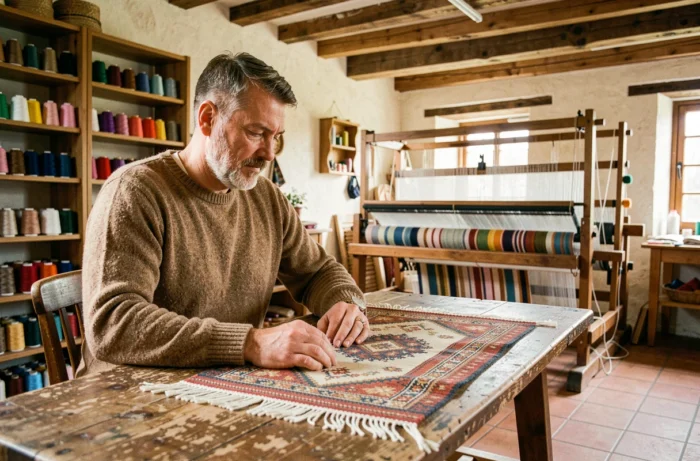
- The proposed activities (craft workshops, participatory projects, agricultural discovery) generate additional income for local farms or associations
- The traveler participates in the daily life of the territory, which implies a longer stay than just a weekend visit
This distinction is rarely visible on general booking platforms, which classify offers by price or location without criteria for social impact.
Ecotourism and labels in France: guidelines for sorting offers
The sustainable tourism market in France suffers from an abundance of labels, certifications, and self-declarations. For travelers, distinguishing real commitment from mere commercial argument requires some concrete guidelines.
Institutional labels remain the most reliable because they impose regular audits and public specifications. Self-declarations (“eco-friendly,” “green,” “responsible”) guarantee nothing without third-party verification.
Criteria to check before booking
- The accommodation or provider displays a label issued by an independent organization, with a visible renewal date
- The waste management, food sourcing, and energy consumption policies are detailed on the site (not just a logo in the footer)
- An identifiable portion of the stay price funds a local project (heritage restoration, support for a school, trail maintenance)
- Traveler reviews mention real interactions with locals, not just the comfort of the accommodation
Traveling differently in France: limits not to ignore
The race for foreign visitors conflicts with national climate objectives. Increasing international attendance implies more long-haul flights, which negates the gains achieved by domestic modal shift.
Proximity solidarity tourism, focused on French residents, partially escapes this paradox. However, it remains a niche market. The majority of stays in France follow classic pricing logic, where the ethical criterion comes into play only as a secondary consideration.
The challenge for the coming years lies less in multiplying labels than in making existing offers clearer. A traveler who chooses the train, stays in rural areas, and spends with local providers reduces their footprint measurably without sacrificing discovery. Available data shows that the French regulatory framework is already pushing in this direction; it remains for solidarity sectors to capture a larger share of domestic demand.