
After 60, family life does not freeze. It reconfigures around new parameters: children leaving home, the arrival of grandchildren, reconfigurations after a late divorce, loss of autonomy of a parent. Understanding these transformations allows for better anticipation rather than suffering through them.
Late divorces and family reconfigurations: what changes concretely after 60
The rise in separations after 50-60, sometimes referred to as “grey divorces,” profoundly reshapes family ties. Relationships with adult children become more complex, family gatherings are negotiated, and grandchildren navigate between multiple households.
A often overlooked point concerns the updating of estate planning and beneficiaries after a separation. Life insurance, supplementary retirement, wills: if nothing is changed, an ex-spouse may remain the default beneficiary. Financial and legal advisors recommend a systematic review of these documents as soon as the divorce is pronounced.
For blended families, the question of each member’s place arises with particular acuity. A new partner has no legal ties to the other’s children, which can create tensions during medical or estate decisions. Several resources address these topics; the site La Revue des Seniors particularly discusses family dynamics specific to this age group.
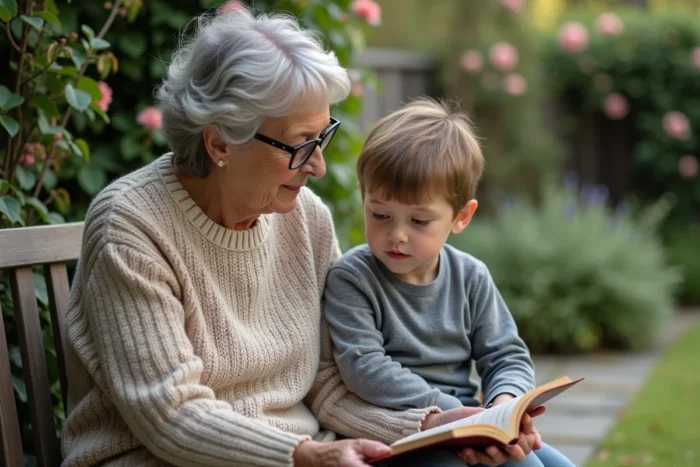
Family life after 60: comparison of tension factors and calming levers
Rather than listing generic advice, it is more useful to map out the concrete situations that weaken or strengthen family ties after sixty.
| Tension Factor | Impact on Family | Calming Lever |
|---|---|---|
| Unanticipated late divorce | Inheritance conflicts, incorrect beneficiaries | Review of the will and insurance contracts |
| Loss of autonomy of a parent | Mental and physical burden on a single helping child | Personalized support plan (law on support care) |
| Social isolation post-retirement | Retreat into the family circle, over-investment emotionally | Collective activities, shared family hosting |
| New romantic encounters | Ambivalent reactions from adult children | Explicit communication about estate choices |
| Geographical distance of children | Fewer visits, feeling of abandonment | Digital tools, pre-planned stays |
This table highlights a recurring pattern: the majority of tensions arise from a lack of anticipation, not from a lack of affection. Families that formalize decisions (legal, medical, logistical) navigate transitions more smoothly.
Family caregivers after 60: a burden that weighs on relationships
In France, several million people are caregivers for an elderly or ill loved one. After 60, one often finds themselves in a dual position: being a senior while also caring for a very elderly parent.
This burden often concentrates on a single sibling. The imbalance generates lasting resentments between brothers and sisters, sometimes more destructive than the illness itself. Three elements can help limit this fracture:
- Distributing tasks in writing, taking into account geographical distance and each person’s professional constraints
- Requesting a personalized support plan with the attending physician, as provided by the recent law on support care, which incorporates the family’s role in the care pathway
- Resorting to intermediate solutions like shared family hosting, a formula increasingly appealing to elderly people wishing to avoid nursing homes while relieving their loved ones
Palliative care cannot incur excessive fees, which reduces financial pressure on families during these difficult times.

Romantic encounters and couple life after 60: the impact on the extended family
Starting a new romantic life after 60 is becoming increasingly common. Dating sites dedicated to seniors are multiplying, and new unions often bring vitality. However, they regularly cause friction with adult children.
The fear of inheritance capture remains the main driver of conflicts. When a parent announces a new relationship, children first worry about the estate, then about well-being. This reflex, even understandable, can poison the relationship if nothing is clarified.
Two concrete measures can defuse most tensions:
- Opting for a separation of property regime in case of remarriage, and openly communicating this to the children
- Writing or updating a handwritten will specifying the desired distribution, to avoid the law applying by default in favor of the new spouse to the detriment of the children
- Introducing the new partner in a relaxed setting, without forcing immediate acceptance
Transparency regarding assets is not a lack of romance. It is an act of respect towards all parties, which protects the new relationship as well as existing family ties.
Staying at home and adapting housing: a choice that engages the whole family
The overhaul of geriatric pathways announced for 2026 repositions the home as a central place for aging. Staying at home as long as possible is the wish of the vast majority of seniors. This choice mobilizes the entire family, whether it involves financing adaptation work or coordinating home caregivers.
Adapting a bathroom (replacing the bathtub with a walk-in shower, installing grab bars, non-slip flooring) or installing a stairlift represents an investment that can weigh on the family budget. Public assistance exists, but its administrative complexity often discourages families without support.
Sharing one’s home with another senior or a young person in exchange for services is an alternative that is gaining ground. The site pour-les-personnes-agees.gouv.fr lists intergenerational cohabitation arrangements, a path that lightens the burden on children while breaking isolation.
Family life after 60 is less about feelings and more about organization. Families that anticipate legal, estate, and logistical questions navigate transitions with fewer fractures. Those who postpone these discussions often discover that a succession conflict or poorly distributed caregiving burden can damage decades of ties in just a few months.