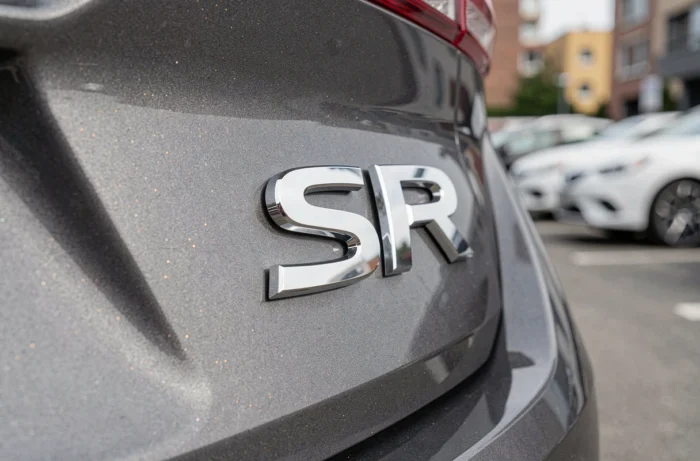
The acronym SR affixed to a body does not refer to a single definition. Depending on the manufacturer, the era, and the market, these two letters sometimes designate an entry-level trim, sometimes a sporty variant, and sometimes a safety indicator. This ambiguity regularly traps buyers, especially in the used car market.
SR as base trim: the shift in meaning at Toyota and Nissan
In the 1990s and 2000s, SR often evoked Sport Rally, a badge associated with versions equipped with more powerful engines and firmer suspensions. The term carried a promise of dynamism.
On recent models from Toyota (Tundra, Tacoma) and Nissan (Kicks), the reality is different. SR now designates the entry-level version, calibrated to display the lowest possible list price while meeting minimum safety requirements. Features like adaptive cruise control, 360° cameras, or blind spot monitoring are reserved for SR+, SV, or XLE trims.
This shift has a direct consequence: buying a vehicle labeled SR without checking the equipment sheet may mean missing out on driving aids that one thought were included. Understanding the meaning of SR on a car helps avoid this type of unpleasant surprise, especially when comparing listings from different markets.
SR and safety: Safety Rating, SRS, and frequent confusion
In the United States, SR can also refer to Safety Rating, the safety score assigned by vehicle assessment organizations. This score summarizes the results of crash tests and the provision of passive and active safety equipment.
The confusion is amplified with the acronym SRS (Supplemental Restraint System), which refers to all restraint devices that complement the seatbelt: front, side, and curtain airbags, seatbelt pretensioners, crash sensors, and the central control unit. All these components communicate with each other via the vehicle’s CAN bus.
SRS warning light illuminated on the dashboard
When the SRS warning light comes on, the system has detected a failure in one of its components. This can range from a simple connectivity issue at the steering wheel’s rotary switch to a fault in the airbag control unit. Driving with this light active means that the airbags may not deploy in the event of a collision.
Common causes of this failure include:
- A connector under the passenger seat dislodged after cleaning or moving the seat, disrupting occupancy detection.
- A side impact sensor damaged by corrosion, common in vehicles over ten years old.
- An airbag control unit battery nearing the end of its life, unable to maintain diagnostic memory.
A diagnostic OBD check allows for reading the specific fault code and targeting the repair without randomly replacing parts.
RIPOST law and powerful SR vehicles: what changes for young drivers
A sporty SR model poses a specific regulatory problem in France since mid-July 2026. The RIPOST law prohibits probationary drivers from getting behind the wheel of cars classified as powerful. The penalties can go up to 15,000 euros in fines and one year in prison.
The trap is real: a novice buyer may turn to an older SR model, thinking they are acquiring a modest version, while the engine associated with the original sporty badge places it in the prohibited category. Checking the fiscal power and the weight-to-power ratio of the vehicle remains the only reliable method before purchase.
Insurance and depreciation of an SR model in the used market
Insurers apply different rates depending on the trim declared on the registration certificate. A sporty SR badge may lead to a surcharge, even if the vehicle is actually a base version rebadged for another market. Providing the VIN to the insurer helps clarify the ambiguity, as this code identifies the exact engine and equipment of the vehicle.

Identifying the true nature of an SR vehicle before purchase
Given the multitude of meanings, a methodical check is essential. The exterior badge is not enough: two vehicles bearing the same SR badge can have radically different equipment levels, engines, and safety profiles.
- Decoding the VIN (Vehicle Identification Number): characters 4 to 8 provide information about the series, engine, and exact trim level as defined by the manufacturer.
- Consulting the technical sheet of the model on the manufacturer’s official website for the relevant market, as an SR sold in Japan does not have the same equipment as an SR marketed in the United States.
- Verifying the actual presence of active safety equipment (emergency automatic braking, lane departure warning) by physically testing them during the drive.
- Requesting the technical inspection report, which mentions the condition of the SRS system and reports any failures related to airbags or pretensioners.
The SR badge remains a marketing shortcut whose technical scope varies from one manufacturer to another and from one decade to another. The only reliable constant is the VIN and the vehicle’s equipment sheet: these truly define what the car contains, not the two letters stuck on the trunk.