An overlooked piece of tape left for a few weeks on a window frame, a masking tape left too long after some work, and there you have it: a sticky, grayish mark that resists a damp cloth. PVC is a sturdy material, but its smooth surface reacts poorly to bad cleaning habits. Choosing the right action at the right time makes all the difference between a clean frame and permanently dull plastic.
Why tape adhesive embeds in PVC
Have you ever noticed that an adhesive removed after two days comes off effortlessly, while the same tape left for a month leaves a sticky film? The adhesive on common tapes is made from synthetic rubber. Over time, heat and UV light partially harden this adhesive and bond it to the surface of the PVC.
Despite its hard appearance, PVC has a microporous structure on its surface. The heat-softened adhesive seeps into these micro-irregularities. When removed, the top layer of the tape comes off, but the adhesive base remains embedded in the texture of the plastic. This is why a simple wipe with water is no longer sufficient.
This reaction accelerates on woodwork exposed to sunlight. A construction tape placed on a south-facing window frame can become nearly impossible to remove cleanly in just a few weeks.
Before testing a product, it is better to remove tape marks from PVC with the advice from Votre Déco to identify the method suitable for your type of residue.
Gentle mechanical cleaning on PVC: the first step not to skip
The most common reflex when faced with a sticky mark is to look for a solvent. Before that, a gentle mechanical approach often removes most of the residue without any risk to the surface.
Soften before scraping
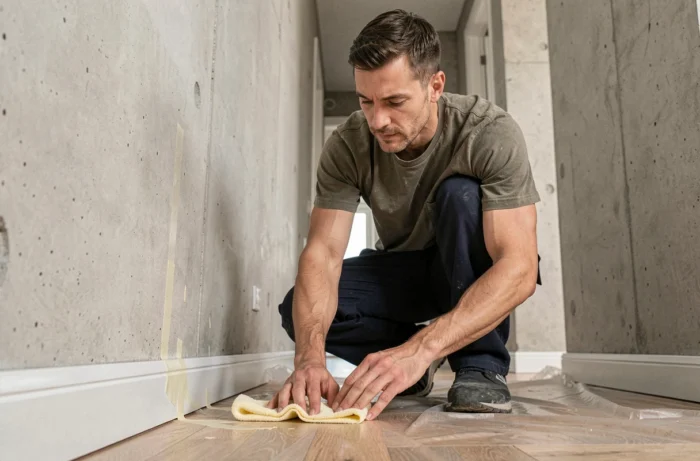
Soak a piece of absorbent paper or a clean cloth with warm soapy water (regular dish soap). Place it on the mark and let it sit for about ten minutes. The warm water softens the hardened adhesive, making it easier to remove.
Only use a plastic card to scrape off the residue. An old bank card, a rigid loyalty card, or a PVC scraper works perfectly. Plastic does not scratch PVC, unlike a metal blade, knife, or green abrasive sponge.
The effective gesture
Scrape while holding the card at a low angle, almost flat against the surface. Work in small areas. If the adhesive rolls under the card into small balls, that’s a good sign: it is coming off cleanly. If it still resists, place the damp cloth back for a few more minutes.
This mechanical step is sufficient in most cases for tapes removed within the first two weeks. For older residues or high-adhesion construction tapes, you will need to move on to the next step.
Isopropyl alcohol and cooking oil: two safe allies for PVC
When soapy water and the plastic card are not enough, two products stand out for their effectiveness without risk to PVC.
Isopropyl alcohol, the least aggressive solvent
Several recent technical guides identify isopropyl alcohol as the least aggressive solvent for PVC among common chemical solvents. It dissolves rubber-based adhesives without attacking the surface of the plastic, provided you follow a few precautions:
- Always test on a hidden area of the frame (behind a hinge, at the bottom of the frame) before applying to a visible part
- Apply with a soft cloth by dabbing, without rubbing in strong circles, and let it sit for only a few seconds
- Immediately rinse with warm soapy water to neutralize the solvent and avoid any prolonged interaction with the PVC
- Work in a ventilated room, as isopropyl alcohol vapors are irritating
The idea is not to soak the surface but to gradually dissolve the adhesive with short, repeated touches.
Cooking oil for stubborn residues
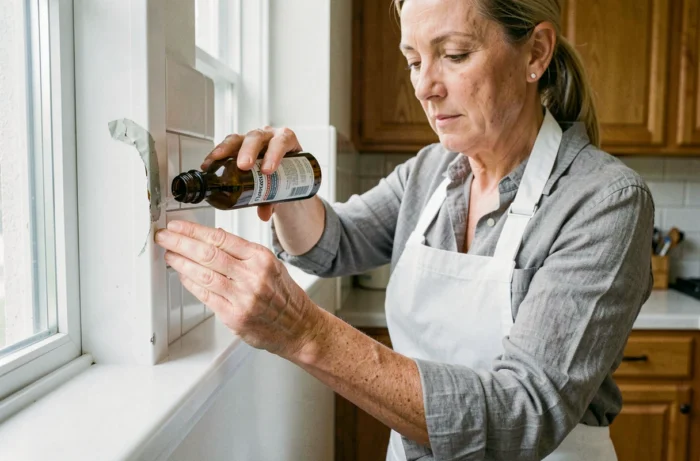
Sunflower oil, olive oil, canola oil: they all work. The fatty substance penetrates under the adhesive film and breaks its bond with the PVC. Drop a few drops on the mark, let it sit for five minutes, then rub with a microfiber cloth.
Cooking oil poses no risk of clouding PVC, making it the safest option for hesitant individuals. The only downside: the residual greasy film. It attracts dust and can disrupt the adhesion of future seals or tapes. Therefore, it is essential to degrease afterward with warm dish soap.
Products to never use on PVC
PVC window manufacturers are now very explicit in their maintenance guides: some common products cause irreversible damage to the plastic. Acetone, white spirit, and concentrated bleach should be avoided.
Acetone, often mentioned on DIY forums, does dissolve the adhesive. It also partially dissolves the surface layer of PVC. The result: a whitish, dull area that is impossible to restore. White spirit leaves a persistent greasy film and can permanently cloud PVC.
Even high-concentration household alcohol should be approached with caution. Always prefer diluted isopropyl alcohol, applied in short touches, rather than unidentified alcohol poured generously on the surface.
Abrasive sponges (the green side of kitchen sponges) and steel wool should also be banned. They create micro-scratches that then become dirt traps, giving PVC an aged appearance in just a few months.
Complete cleaning sequence for an old residue
For a construction tape left for several weeks on a PVC frame, the most reliable method follows a precise order:
- Apply a cloth soaked in warm soapy water for ten minutes to soften the adhesive
- Scrape with a plastic card at a low angle to remove as much residue as possible
- Dab the remaining bits with a cloth soaked in isopropyl alcohol, in short touches of a few seconds
- Rinse with warm soapy water to eliminate any trace of solvent
- If a greasy film remains (after using oil), degrease with warm dish soap and dry with a microfiber cloth
This mechanical then chemical sequence preserves the surface of the PVC while tackling the most stubborn residues. Going directly to a solvent without the mechanical step requires using more product, which increases the risk of altering the plastic.
For very old marks where the adhesive has yellowed and hardened deeply, a specific PVC cleaner (available at hardware stores) or a light paste of baking soda mixed with a bit of water offers a last resort before considering the mark as permanent. Baking soda acts as an ultra-fine abrasive that does not scratch PVC but mechanically dislodges embedded residues.